- 0 views
- By Caroline McNally
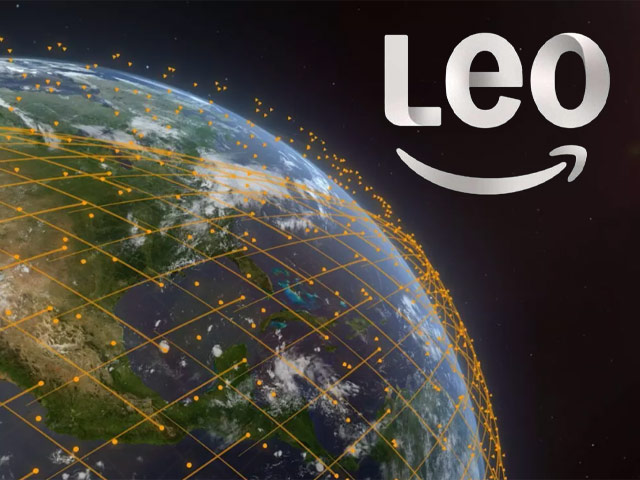
Amazon’s satellite internet initiative has officially rebranded from “Project Kuiper” to Amazon Leo, a shift that reflects a new strategic direction. Rather than emphasizing low-cost broadband for underserved users, the company is now highlighting performance, scalability, and enterprise-level reliability. This repositioning signals Amazon’s intention to establish Leo as a serious infrastructure solution rather than a purely consumer-focused service.
Early messaging around Kuiper centered heavily on affordability and accessibility. With Leo, that narrative has been noticeably removed. Instead, the updated branding emphasizes seamless video calls, high-resolution streaming, and flexible service tiers designed for both residential and commercial users. The new focus suggests Amazon is aiming to compete at the higher end of the performance spectrum—more in line with enterprise connectivity than community broadband.
An important indication of that shift is the announcement that Hunt Energy will be adopting Amazon Leo for its global operations. Hunt’s new Skyward division will use the network to support remote energy sites with satellite connectivity, secure networking, and integrated power solutions. For major industrial operations that rely on continuous monitoring across large or isolated geographies, low-latency satellite links can dramatically improve responsiveness and operational efficiency.
From a utility engineering standpoint, Amazon Leo could become a powerful backbone for modernization projects. As more companies look toward remote automation, real-time data capture, and digital oversight of infrastructure, the need for reliable off-grid connectivity grows. Engineering teams may soon be installing Leo ground terminals, configuring secure network nodes, and integrating satellite-enabled sensors into critical systems.
Hunt Energy’s approach provides an early blueprint for what these projects might look like. Their plans include rugged outdoor antennas, small modular power systems, and on-site installation services adaptable to challenging environments. Similar deployments across electric utilities, water management districts, and energy producers could accelerate industry-wide adoption of satellite-enhanced field operations.
For consumers, Amazon Leo introduces a lineup of terminals designed to serve different needs. Smaller residential units target everyday internet use, while mid-range and enterprise-grade antennas offer significantly higher throughput, reaching speeds previously associated only with terrestrial fiber solutions. This tiered approach suggests the service will cater to performance-conscious households and businesses rather than focusing primarily on affordability.
Overall, the rollout of Amazon Leo has major implications for the utility engineering sector. As satellite connectivity becomes more capable and enterprise-oriented, it will open doors to new infrastructure projects, new monitoring capabilities, and new opportunities to serve customers in regions where traditional networks fall short. For engineering firms, the shift from Kuiper to Leo marks the beginning of a much more significant role for satellite networks in the built environment.


Related articles and news
 Infrastructure
 America’s Aging Energy Infrastructure: Can the U.S. Avoid Another Downgrade?
The U.S. energy grid is under pressure like never before. Aging equipment, surging demand, and climate‑driven threats have pushed the nation’s energy …
Read more Innovation
 The Fiber Frontier: What 2026 Could Reveal About the Next Leap in Internet Technology
The world of fiber-optic connectivity is gearing up for a defining year in 2026. What was once viewed primarily as a faster alternative to copper broa …
Read more